Cattle Were Family
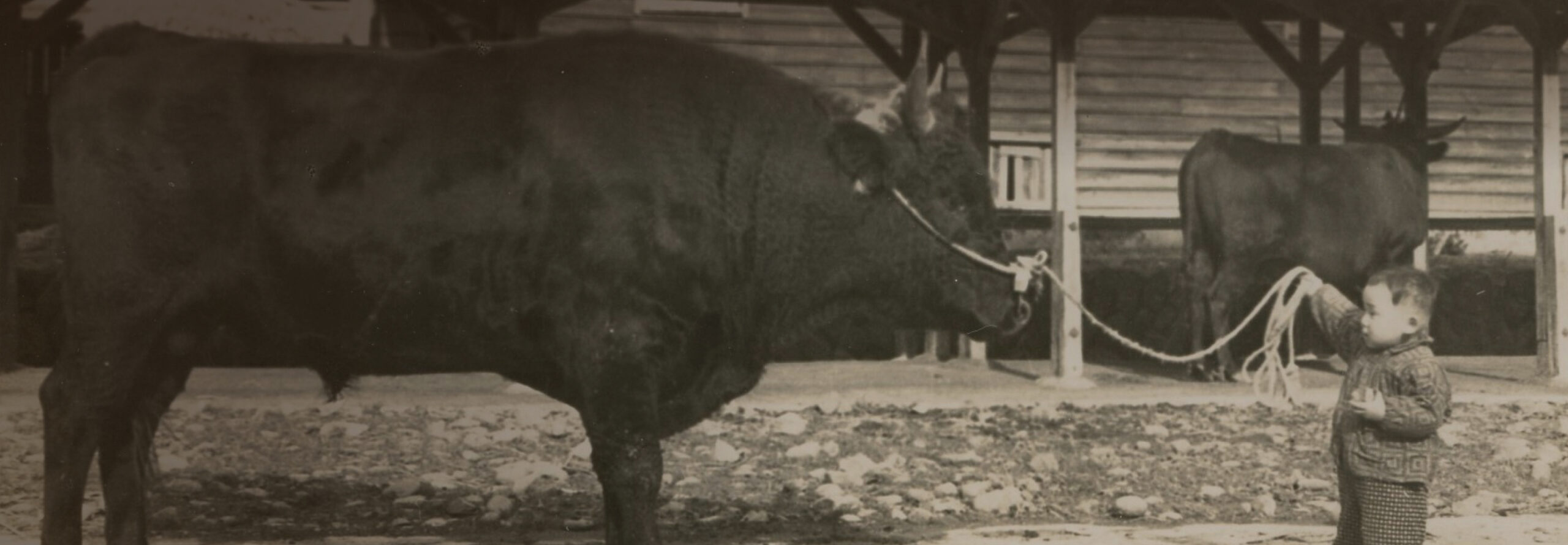
In Mikata, cattle were never just livestock. They supported farm work and daily life, forming a deep bond with the people who lived alongside them. This way of life remains a fundamental part of the value of Tajima cattle.
A Landscape That Nurtured Wagyu
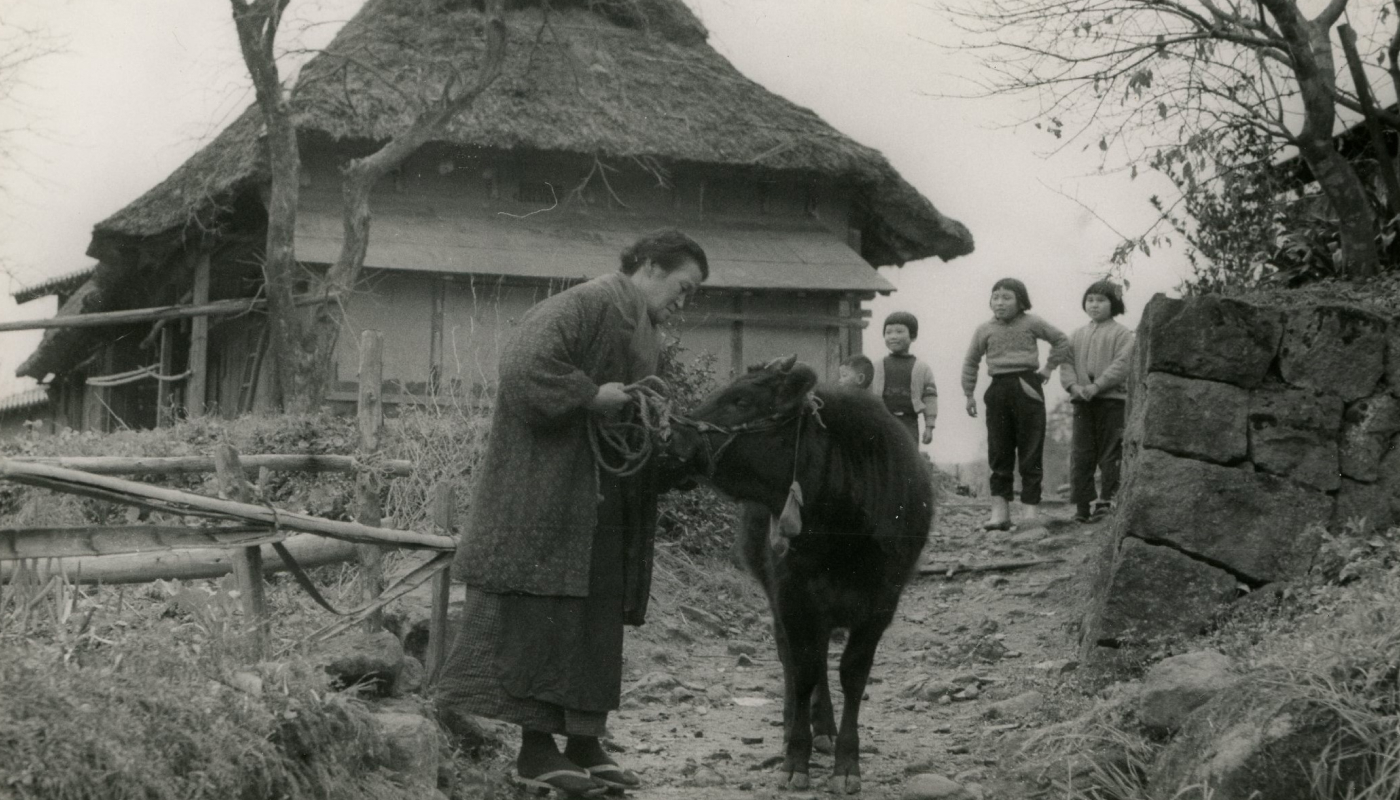
Mikata is a heavy snow region surrounded by mountains rising over 1,000 meters. Flat land is scarce, and many settlements developed along narrow valleys. Despite the harsh environment, the area is rich in natural grasses—ideal conditions for raising Tajima cattle.
Mountains Rising Above 1,000 Meters
The cool climate and rugged environment provided ideal conditions for raising strong, high-quality cattle.
Heavy Snowfall Region
Long, harsh winters fostered close bonds and mutual support between people and their cattle.
Abundant Grass Resources
Mountain grasslands supplied high-quality forage essential for cattle raising.
Living Under the Same Roof
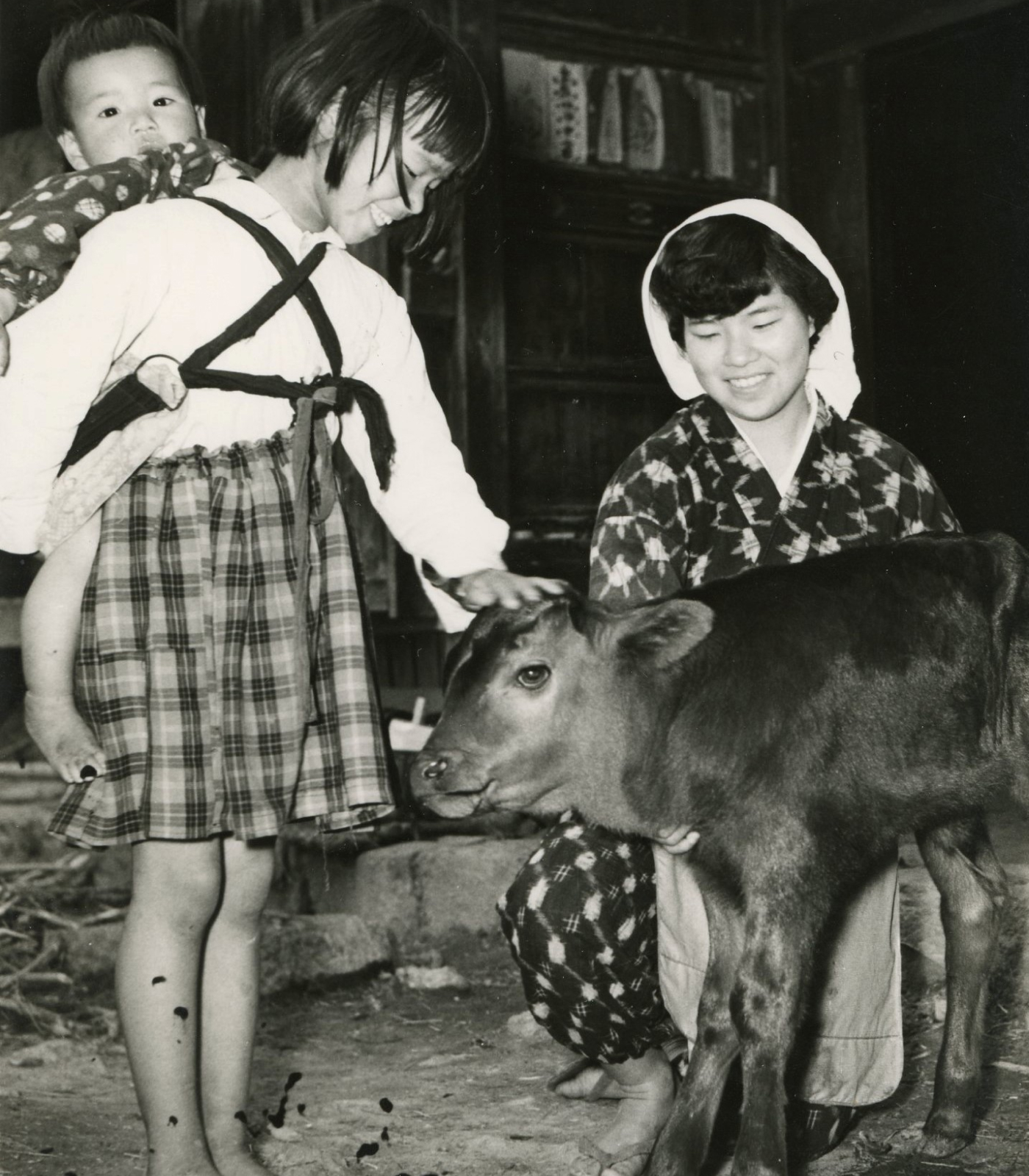
In traditional farmhouses, the stable stood beside the main entrance, and people and cattle lived in the same building. Cattle plowed the fields, produced manure, and their calves provided essential income—making them treasured “farm jewels.”” Farmers fed warm fodder in winter, gave each cow a name, and cared for them like family. These traditions are still remembered today.
An Indispensable Agricultural Treasure for Farming Families
An Agricultural Treasure
A Culture Born from Affection for Cattle
Newborn calves were given names expressing hopes for fortune, such as Sachi (happiness) or Fuku (good fortune). On shipping day, farmers attached charms or ohineri (a small offering wrapped with dried fish) to the cattle. Such customs arose from deep affection. For farmers, cattle were not mere assets—they were cherished companions in life.
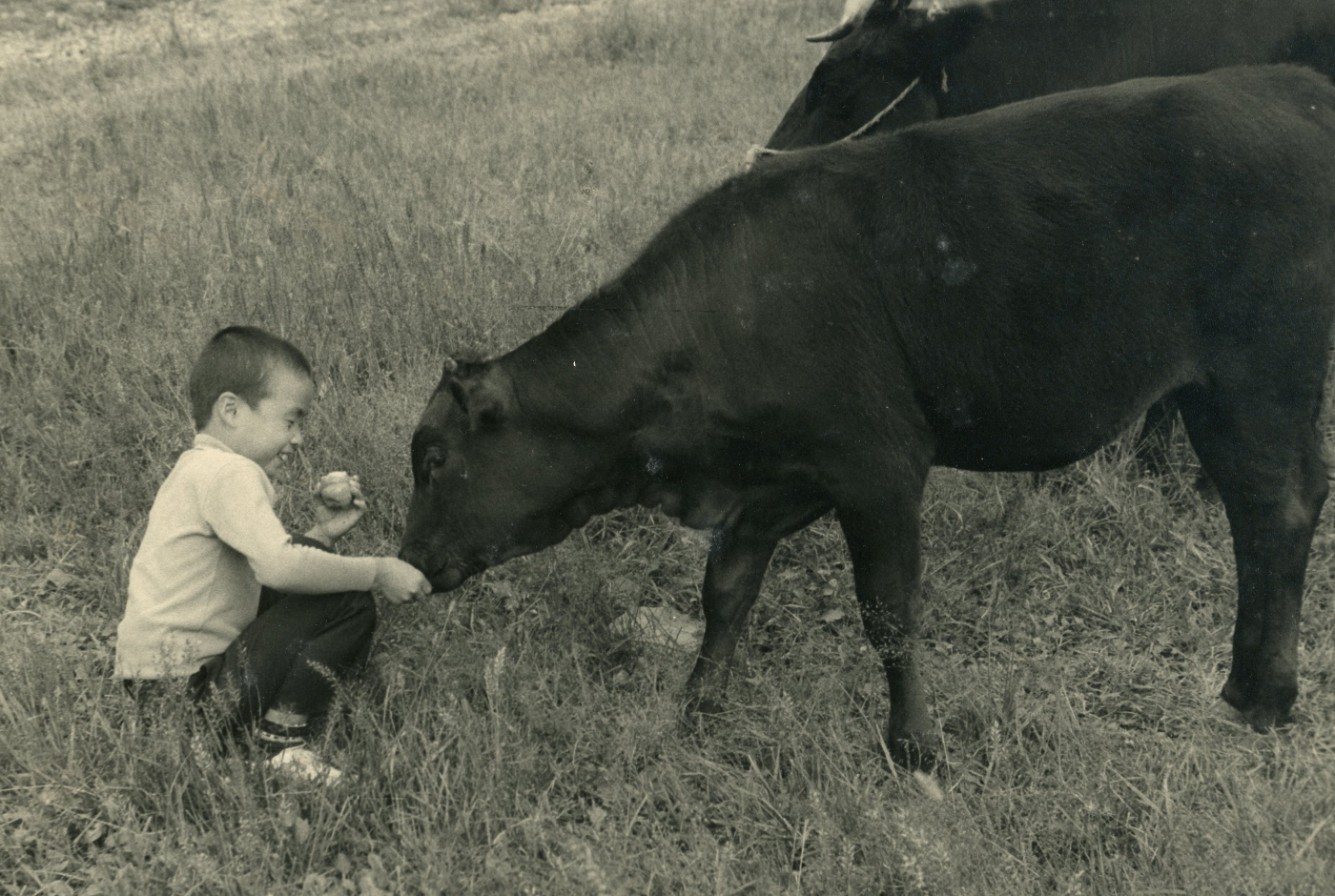
Passing Traditions to the Future
Even today, local schools teach about Tajima cattle. Through brushing and feeding experiences, children learn pride in their region. The bond between people and cattle continues into the next generation.